When Eliane learned that I was interested in agriculture, she reached out to her friends and family to get ideas of acitivities that might interest me. Luckily, one of her best friends, Elisangela, is a biologist and one of her friends from university now owns and runs his own orchid farm in a rural polish colony area just outside of Curitiba. Sunday we drove out for lunch and a day on the farm named RF Orquideas.


 The best part of the visit was learning about how orchids are produced given that they are such complex plants. The only knowledge I have of them in Canada is that people marvel at their beauty, they sell for $20 and up per plant and that they die easily.
Here you can see an orchid pod. Each of those white particles is a seed. The seeds are first sanitized in a solution for a few months to ensure that there is no bacteria or viruses that would compromise the growth of the plants. Next, the seeds are tranferred to a sugar, banana, coconut water jelly solution for four plus months to germinate. During this time the jars are kept sealed so that no external particles can disrupt the growth of the orchids. At 8 months, the seeds have turned into an algae like growth, still not at all resembling a plant. Thereafter they are fed again and this process occurs in jars until the plants are two years old at which time they are separated and put into a moss/nutrient starter and allowed to start growing.

 Rogerio, the farmer, is actually a biologist by trade. For this reason, he says the seed harvesting, growth and development, when the plants are most fragile, is the part he enjoys most. I definitely felt like I was in a science lab. Once the plants are able to grow on their own in natural conditions, he interest waynes though he is still able to make a good sell to his customers at markets and the majority of customers that buy right from the farm.
In order to fertilize the flowers, Rogerio demonstrated 'flower sex' for me. The orchid has both male and female components on the same flower. You remove the pollen with your finger from a flower and put it at the base of another flower so that the seed pod can form and grow. You can create a variety of hybrids by mixing the flowers, though Rodriego keeps certain rare varieties pure to help preserve their species.


 At lunch I also got to try some different foods including cactus fruit from a gigantic cactus the grows in the front yard and herba matte. This drink is served very hot and you drink it out of this special vessel with a metal straw that prevents the larger particles from being consumed.


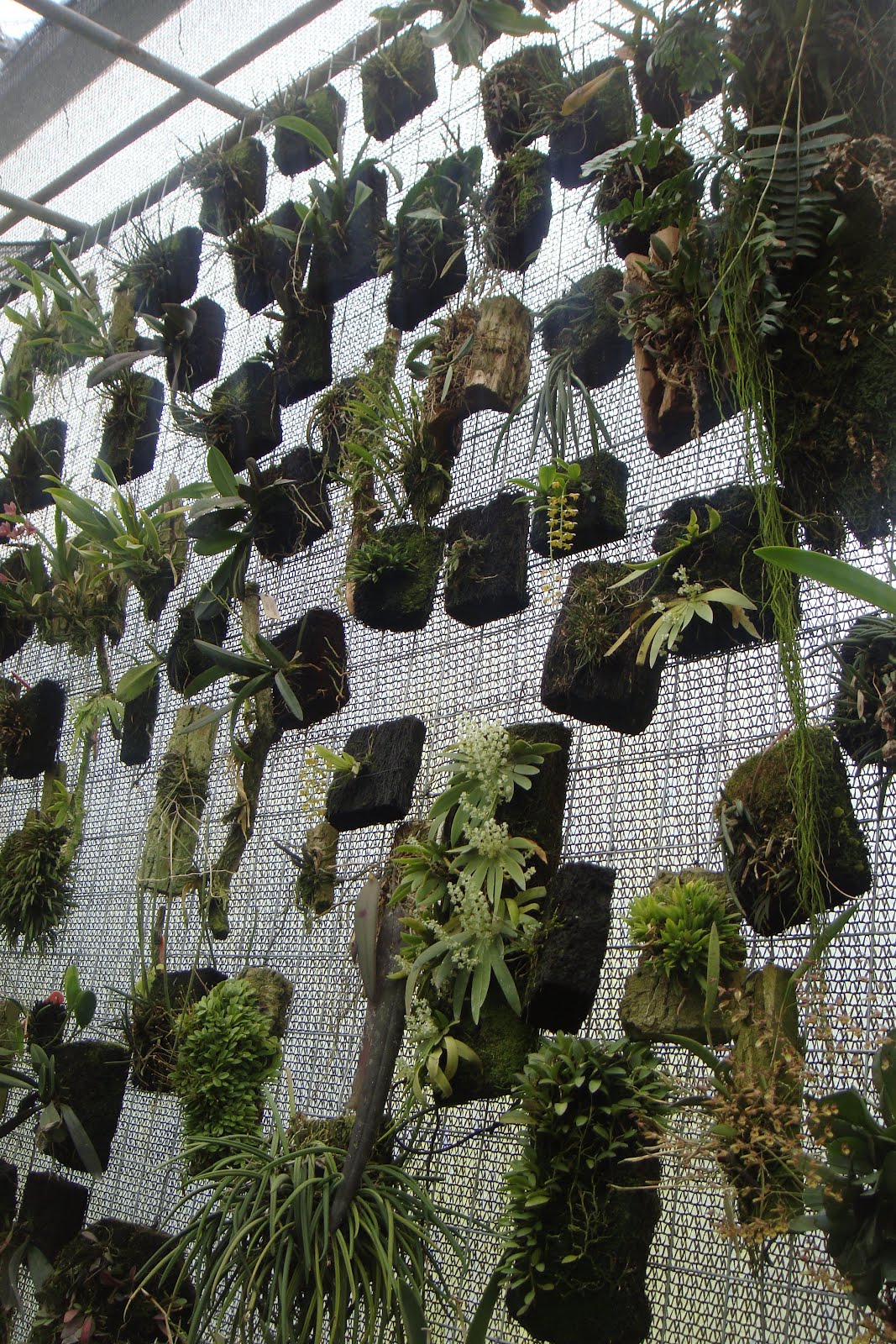
Orchids are very diverse. At the farm alone there are about 1000 varieties grown. Some are large planted orchids, others are small tree side orchids, and some too are hanging varieties that don't even need soil. Rodriego apparently has an orchid that is 30 years old.
 At lunch I also got to try some different foods including cactus fruit from a gigantic cactus the grows in the front yard and herba matte. This drink is served very hot and you drink it out of this special vessel with a metal straw that prevents the larger particles from being consumed.